Top Egyptian Myths That Travelers Still Ask About
Egypt is one of the world’s most fascinating travel destinations, but it is also one of the most misunderstood. For thousands of years, the country’s pyramids, temples, mummies, and pharaohs have inspired countless legends, books, movies, and documentaries. While these stories have made Ancient Egypt even more mysterious, they have also created many myths that continue to confuse travelers today.
Visitors arriving in Cairo, Luxor, Aswan, or Abu Simbel often ask the same questions: Were the pyramids built by aliens? Did mummies really place curses on anyone who disturbed their tombs? Was Cleopatra actually Egyptian? These are excellent questions, but the answers are usually far more interesting than the myths themselves.
The truth is that Ancient Egyptian civilization was extraordinary without needing supernatural explanations. Its achievements in architecture, engineering, astronomy, medicine, and art continue to amaze historians and archaeologists around the world.
Here are some of the most common myths travelers still ask about—and the fascinating truths behind them.
Myth 1: Every Pharaoh Was Buried Inside a Pyramid
The Myth
Many people believe that every Egyptian pharaoh was buried inside one of the pyramids, especially the famous Pyramids of Giza.
The Truth
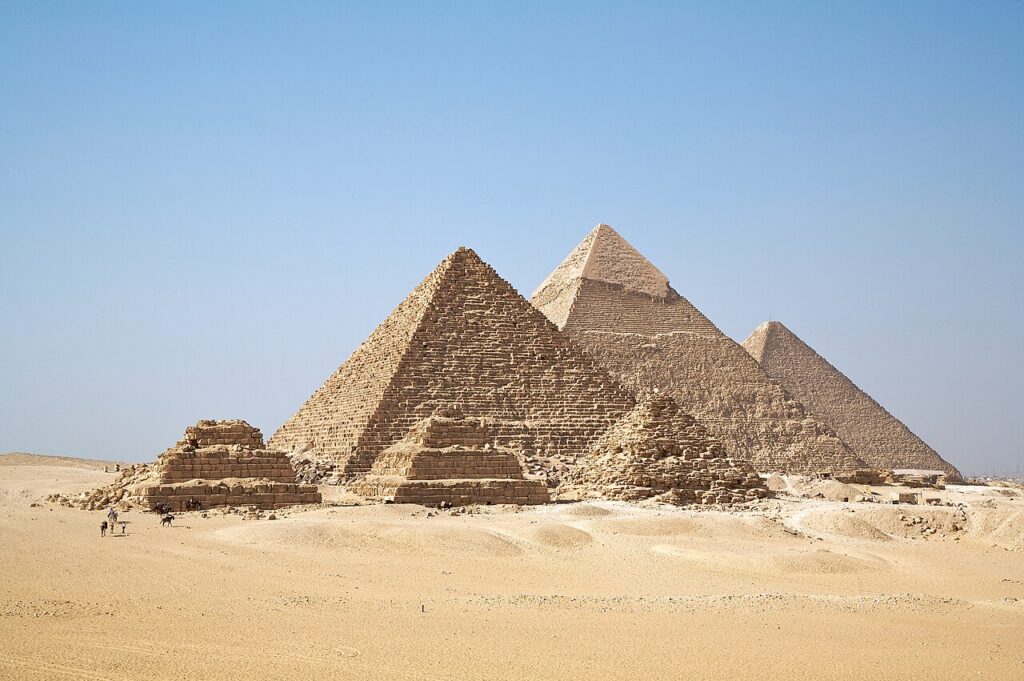
Only the rulers of Egypt’s Old Kingdom were commonly buried in pyramids. The Great Pyramid of Khufu, along with the pyramids of Khafre and Menkaure at Giza, served as royal tombs over 4,500 years ago.
By the time of the New Kingdom, Egypt’s rulers had abandoned pyramid burials. Instead, they chose hidden rock-cut tombs in the Valley of the Kings near Luxor. These secret tombs were designed to protect royal treasures from tomb robbers and provided more elaborate underground burial chambers decorated with beautiful hieroglyphs and colorful scenes from the afterlife.
Today, visitors to Luxor can explore the tombs of famous pharaohs such as Tutankhamun, Seti I, and Ramses VI, discovering a completely different style of royal burial.
Myth 2: Mummies Place Curses on Visitors
The Myth
Anyone who enters an ancient tomb risks awakening a deadly curse.
The Truth
The idea of the “Curse of the Pharaohs” became famous after the discovery of Tutankhamun’s tomb in 1922. When several people connected to the excavation died over the following years, newspapers around the world sensationalized the story, suggesting supernatural forces were responsible.
In reality, there is no scientific evidence that ancient curses caused these deaths.
Some tombs contained warning inscriptions intended to protect the deceased spiritually, but they were religious texts rather than magical traps. Modern archaeologists carefully study tombs using conservation methods and scientific techniques, and millions of visitors safely enter Egyptian tombs every year.
The real wonder is not an ancient curse—but the incredible preservation of monuments that have survived for thousands of years.
Myth 3: Aliens Built the Pyramids
The Myth
The pyramids are so impressive that they must have been built by extraterrestrials.
The Truth
This is one of the most widespread myths about Ancient Egypt.
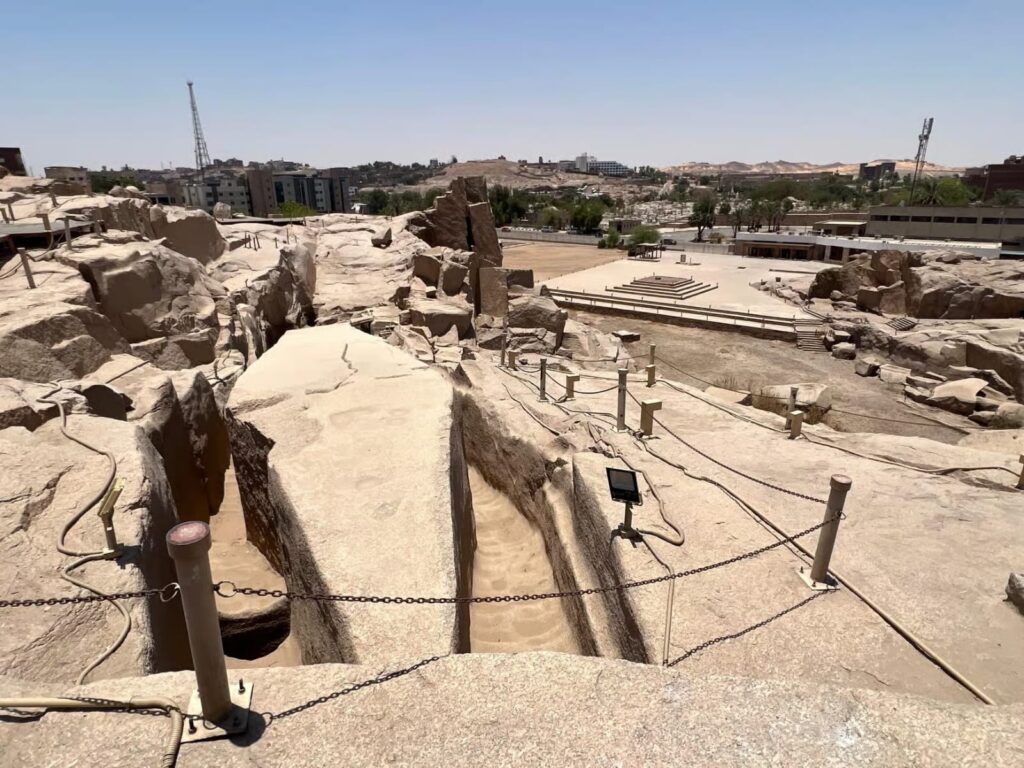
Archaeological discoveries have shown exactly how Egyptian workers quarried limestone, transported massive stone blocks, organized skilled labor forces, and used ramps, sledges, and engineering techniques to construct these extraordinary monuments.
Excavations near the Giza Plateau have uncovered workers’ villages, tools, bakeries, and even the tombs of the builders themselves. These discoveries clearly demonstrate that the pyramids were built by highly organized Egyptian workers—not by aliens.
Their achievement is remarkable because it reflects human ingenuity, planning, mathematics, and determination.
Myth 4: Ancient Egyptians Worshipped Only the Sun
The Myth
Ancient Egyptians believed only in the sun god Ra.
The Truth
Although Ra was one of Egypt’s most important deities, he was far from the only one.
Ancient Egyptian religion included hundreds of gods and goddesses, each representing different aspects of nature, society, and the universe.
Among the best known are:
- Amun, king of the gods in Thebes (modern Luxor)
- Isis, goddess of motherhood and magic
- Osiris, ruler of the afterlife
- Horus, protector of kings
- Hathor, goddess of love and music
- Anubis, guardian of mummification
- Sobek, the crocodile god
- Khnum, creator god associated with the Nile
Different cities honored different patron gods, which explains why temples across Egypt are dedicated to various deities.
Myth 5: Cleopatra Was Egyptian
The Myth
Cleopatra was an Egyptian queen descended from the ancient pharaohs.
The Truth
Cleopatra VII ruled Egypt as pharaoh, but she belonged to the Ptolemaic Dynasty, founded by one of Alexander the Great’s generals after his conquest of Egypt.
Her family was of Macedonian Greek origin.
What made Cleopatra unique was her willingness to embrace Egyptian traditions. She learned the Egyptian language, participated in religious ceremonies, and presented herself as the living goddess Isis to strengthen her connection with her people.
Her intelligence, political skill, and diplomatic abilities helped make her one of history’s most famous rulers.
Myth 6: Hieroglyphs Are Magical Symbols
The Myth
Hieroglyphs contain hidden magical powers that only priests understood.
The Truth
Hieroglyphs were Ancient Egypt’s formal writing system.
They combined pictures, sounds, and symbolic meanings to record everything from royal decrees and religious prayers to historical events, literature, and personal names.
Although certain inscriptions were believed to possess spiritual significance—especially those found inside tombs—the writing system itself functioned much like any other language.
Thanks to the Rosetta Stone and the work of French scholar Jean-François Champollion, hieroglyphs were successfully deciphered in the 19th century, allowing historians to read Ancient Egypt’s own words once again.
Myth 7: The Sphinx Lost Its Nose Because of Napoleon
The Myth
Napoleon’s soldiers shot off the Great Sphinx’s nose during their campaign in Egypt.
The Truth
This popular story is false.
Historical drawings made before Napoleon arrived in Egypt already show the Sphinx without its nose. Most historians believe the nose was intentionally damaged centuries earlier, although exactly who removed it remains uncertain.
Despite the missing nose, the Great Sphinx continues to be one of Egypt’s most iconic monuments.
Why Do These Myths Continue?
Ancient Egypt naturally inspires mystery. Massive monuments, undeciphered symbols, hidden tombs, and dramatic stories have encouraged filmmakers, novelists, and television producers to blur the line between history and fiction.
While these legends make entertaining stories, the real history of Ancient Egypt is even more extraordinary. The civilization’s achievements in architecture, engineering, astronomy, medicine, mathematics, and art continue to impress modern scientists without requiring supernatural explanations.
Final Thoughts
Ancient Egypt is filled with genuine wonders that need no exaggeration. The pyramids were built by brilliant engineers and skilled workers. The temples were designed with astonishing precision. Hieroglyphs preserve the voices of a civilization that flourished for more than three thousand years, and the royal tombs reveal remarkable beliefs about life, death, and eternity.
Understanding the facts behind these famous myths allows travelers to appreciate Egypt on a much deeper level. Whether you’re standing before the Great Pyramids, exploring the Valley of the Kings, walking through Karnak Temple, or sailing along the Nile, you’ll discover that the truth is often even more fascinating than the legends.
The next time someone asks whether aliens built the pyramids or if mummies still cast curses, you’ll know the answer—and you’ll have an even greater appreciation for the remarkable achievements of one of the world’s greatest civilizations.